


The changes of the legal status of the non-Muslim population of the Ottoman Empire in the context of the Tanzimat reforms

https://doi.org/10.22394/2074-7306-2023-1-4-44-49
EDN: WMIHFG
Abstract
The article is devoted to the study of the legal status of the non-Muslim population of the Ottoman Empire and the transformation of this status in the era of Tanzimat reforms. The author analyzes the doctrinal foundations of Islamic legislation in terms of regulating the life of non-Muslim communities, combining the study of the letter of Muslim law with the historical context. A comparative analysis of Islamic theoretical and legal material, coupled with socio-political processes, is carried out. The emphasis of the study is on studying the transformation of the millet system under the influence of Western European legal thought with the aim of creating a modern nation. The relevance of studying the legal aspects of regulating the lives of non-Muslims in the process of changing the legal status of non-Muslim communities in the structure of Ottoman society is shown. The author comes to the conclusion that although changes in the legal status of other religious communities took place in this era, nevertheless, they did not allow the creation of a single homogeneous society based on a common identity.
About the Author
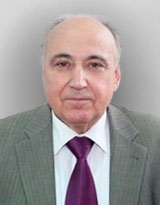
I. V. Fedosov
Northwestern Institute of Management – branch of Russian Presidential Academy of National Economy and Public Administration
Russian Federation
Russian Federation
Ivan V. Fedosov – Senior Lecturer at the Department of Law
St. Petersburg
References
1. Tyurker T. Ottoman modernization, Islam, the problem of personality and the state. In: Russia and the Islamic world: a historical retrospective and modern trends. Moscow: Institute of Oriental Studies of the Russian Academy of Sciences, Kraft+; 2010. – 480 p. (In Russ.)
2. Hobsbawm E. Nations and nationalism after 1780; translated from the English by A. A. Vasil-ev. St. Petersburg: Aleteya; 2017. 308 p. (In Russ.)
3. Fedorov S. E., Filyushkin A. I. History and theory of nations and nationalism: textbook. St. Petersburg: Publishing House of St. Petersburg University; 2016. 208 p. (In Russ.)
4. Petrosyan. A. Russian historiography of the Ottoman Empire of the XVIII – XX centuries. St. Petersburg: Nauka; 2012. 260 p. (In Russ.)
5. Petrosyan Yu. A. The Ottoman Empire: power and death. Historical essays. Moscow: Nauka. The main editorial office of Oriental literature;1990. 280 p. (In Russ.)
6. Safrastyan R. A. The doctrine of Ottomanism in the political life of the Ottoman Empire (50 – 70 years of the XIX century). O. G. Injikyan (ed.). – Erevan: Publishing House of the Academy of Sciences of the Armenian SSR; 1985. – 147 p. In the supervision of: Academy of Sciences of the Armenian SSR, Institute of Oriental Studies. (In Russ.)
7. Dulina N. A. Reforms of the Tanzimat and Sharia. In: Islam in the history of the peoples of the East. Moscow: The Main editorial office of Oriental literature of the publishing house "Nauka"; 1981. 197 p. (In Russ.)
8. Burak G. The requirements of evidentiary truth, imperial registers and the Ottoman archive: Contradictory legal views on the practice of archiving and record keeping in Ottoman Great Syria (XVII–XIX centuries). Bulletin of SOAS. 2016;77(1):129–142. (In Russ.)
9. Kostopoulou E. Autonomy and Federation within the Ottoman Empire: an introduction to a special issue. Journal of Balkan and Middle Eastern Studies. 2016;18(6):525–532. (In Russ.)
Review
For citations:
Fedosov I.V. The changes of the legal status of the non-Muslim population of the Ottoman Empire in the context of the Tanzimat reforms. North Caucasus Legal Vestnik. 2023;(4):44-49. (In Russ.) https://doi.org/10.22394/2074-7306-2023-1-4-44-49. EDN: WMIHFG
Views:
172
JATS XML





 Email this article